
When routine dental care isn’t quite enough to address a complex issue in your mouth, jaw, or face, your general dentist will often refer you to a specialist. An oral surgeon undergoes four to six years of surgical and anesthesia training beyond dental school, making them uniquely qualified to perform intricate surgical procedures safely and comfortably.
Understanding what these specialists do can help take the anxiety out of an upcoming referral. From routine extractions to major reconstructive care, here is a detailed breakdown of the most common treatments provided in a surgical dental practice.
Tooth Extractions and Wisdom Teeth Removal
Tooth extraction is easily one of the most frequent reasons patients visit a specialist. While general dentists routinely pull simple teeth, more challenging cases require specialized surgical techniques.
Impacted Wisdom Teeth
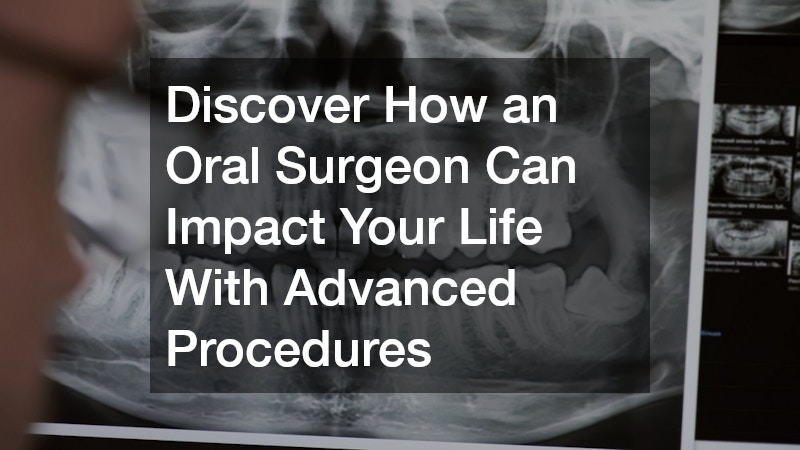
Wisdom teeth, or third molars, typically attempt to emerge in late adolescence or early adulthood. Because modern human jaws often lack sufficient space to accommodate these extra teeth, wisdom teeth frequently become impacted—meaning they remain trapped beneath the gums or growing at improper angles against neighboring teeth.
An oral surgeon removes these problematic molars to prevent crowding, cyst formation, tooth decay, and painful gum infections. Performing this under IV sedation ensures the patient remains completely comfortable throughout the process.
Complex Dental Extractions
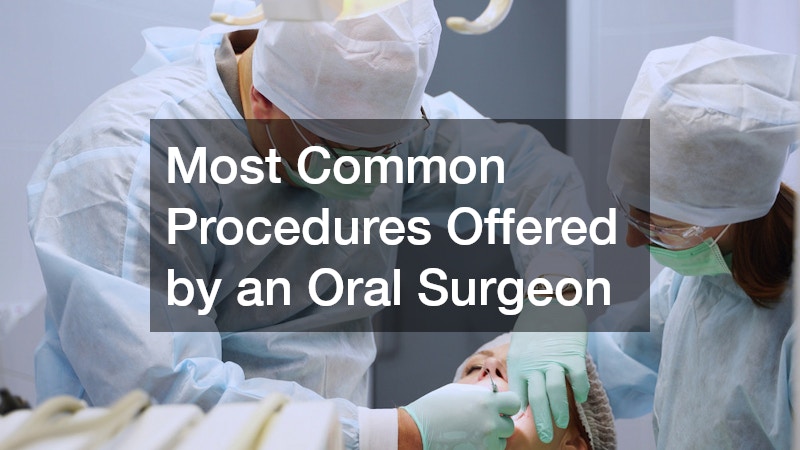
Not all tooth extractions are straightforward. Teeth that have broken off at the gumline, severe decay extending deep beneath the bone, or roots wrapped around critical nerves demand expert precision. Surgical extractions involve making small incisions in the gum tissue, gently removing surrounding bone, and occasionally segmenting the tooth into smaller pieces for a smooth, low-trauma removal.
Dental Implant Placement and Bone Grafting
Restoring missing teeth has been revolutionized by modern implant technology. Rather than relying solely on removable dentures or traditional bridges, long-term tooth replacement focuses on rebuilding the tooth from root to crown.
Permanent Tooth Replacement
A dental implant is a small titanium fixture placed directly into the jawbone to serve as an artificial root. Over several months, the titanium fuses naturally with the surrounding bone tissue in a process known as osseointegration. Once healed, the implant provides a rock-solid anchor for a custom crown, bridge, or fixed denture. An oral surgeon evaluates bone density and structural anatomy using advanced three-dimensional imaging to place the post with microscopic precision.
Bone Grafting Procedures
When a tooth is missing for a long time, the underlying jawbone naturally shrinks due to a lack of stimulation. To build a solid foundation for an implant, a patient may first need a bone graft. During this procedure, synthetic or donor bone material is placed in areas of low density, encouraging your body to regenerate natural bone.
Common bone grafting treatments include socket preservation, which involves placing graft material immediately after extraction to protect bone volume. Sinus lifts are another frequent approach, elevating the sinus floor in the upper jaw to create space for sturdy implant placement. Additionally, surgeons often perform ridge augmentations to restore the natural width and height of a jaw line lost to trauma or bone resorption.
Corrective Jaw Surgery and Facial Trauma
Beyond the teeth themselves, surgical care extends to the broader skeletal structures of the lower face.
Orthognathic Surgery
Orthognathic, or corrective jaw surgery, realigns misaligned jaws to fix major functional issues that orthodontic braces alone cannot resolve. Conditions like severe overbites, underbites, open bites, or chronic jaw joint pain (TMJ disorders) can interfere with chewing, swallowing, speaking, and breathing. By carefully repositioning the upper jaw, lower jaw, or chin, the surgeon improves both facial symmetry and long-term oral functionality.
Facial Injury Repair
Because of their extensive hospital training, these specialists are routinely called upon to manage acute facial trauma in emergency settings. This includes setting fractured jawbones, repairing broken cheekbones or eye sockets, and stitching soft-tissue lacerations to minimize scarring and restore normal anatomy.
Biopsies and Pathology of the Mouth
The lining of the mouth is made of delicate tissue that can occasionally develop unusual spots, bumps, or color variations.
Diagnosing Oral Lesions
While most changes inside the mouth are harmless benign conditions, any unexplained red or white patches, non-healing sores, or unexpected swellings warrant investigation. An oral surgeon performs biopsies by removing a small tissue sample or the entire lesion and sending it to a pathology lab for testing. Early identification of oral cancer or precancerous changes significantly improves treatment success rates.
Essential Considerations Before Your Procedure
Preparing for treatment begins with a thorough consultation. Your practitioner will review your full medical history, discuss medication use, and take digital scans to design a tailored surgical plan.
Post-operative recovery typically involves a few days of rest, following specific diet guidelines, managing swelling with cold packs, and keeping the surgical sites clean with gentle saltwater rinses. Choosing a qualified oral surgeon guarantees that you are receiving the highest standard of specialized care, ensuring a smooth recovery and a healthy smile for years to come.